Showing posts with label Indian Equity. Show all posts

January 21, 2017

Indian Equities: Invest in “Quality” but….


While globally the trend is clearly in favour of ETF’s or passive investing, emerging markets like India still offers plenty of scope for stock selection and active management.  Investors can take a cue from bellwether indexes like Nifty 50 or Sensex and develop strategies around them to gain alpha. In this context, the recently launched index by National Stock Exchange (NSE) 2015 attracted my attention. . It is titled as “Nifty 30 Quality Index” comprising 30 best Indian companies evaluated across three important parameters i.e., Return on Equity (RoE), Debt to Equity ratio (D/E) and Net Income growth. It is normally understood that highly profitable companies with low levels of debt perform well over time compared to medium to low profitable business with high leverage. True to this logic, the Nifty quality index returned 16% annualized during the last three years compared to 13% for Nifty 50. Definitely some alpha here for chasing quality.

While index investing is a good idea for lay investors, professional investors can do more in terms of deciphering some strategy around these indices. Any index is always a combination of great, good and poor stocks. Buying the index (in the form of ETF) means not only buying great and good but also poor stocks. This article attempts to improvise the quality index by focussing only on great stocks and see if we can perform better than the index.

The 30 companies in the quality index can be broken down into three groups viz., , great, good and poor based on their stock performance since the launch of the index.


While great group are super performers, the good group eked out decent performance while poor group actually performed poorly true to their name. The poor group pulled down the overall performance of the quality index as they enjoyed higher share of the index by virtue of their size. Here is the summary of the three groups:

 April, 2013 to September, 2016
Great
Good
Poor
Total
No of stocks
14
9
7
30
Market cap weight (%)
33
31
36
100%
Average. RoE ( %)
28
45
27
33
Average D/E ( %)
44
10
2
18
Annualized Net Income growth (i%)
27
2
0
7.4


Portfolio Performance
34%
17%
8%
16%

Dissecting the 30 companies constituting the quality index, we can see that 14 of them are star performers, 9 good and 7 companies draggers with more or less equally divided weights among themselves. It is interesting to note that all three groups enjoy high return on equity. However, the great group has the highest debt to equity ratio while the poor group has the lowest. However, the key among the metrics is the net income growth. The great group show a robust net income growth of 27% annualized while the good group show only 2% growth. Worse, the poor group show 0% growth. If you carve out these three groups as distinct portfolios, the great group portfolio returned an astounding performance of 34% annualized, the good group 17% (equivalent to the quality index performance) while the poor group returned only 8% severely underperforming the overall quality index.


In each of these groups there are surprising entries as well. For eg., in the great group we have companies like Emami and Tata Motors recording negative income growth but stellar stock price performance. The poor net income growth can be attributed to latest quarters and hence they may be penalized going forward. In the good group category, Tech Mahindra enjoys high RoE, low D/E and high NI growth but performed average relative to index which is surprising. In the poor group, we don’t see any surprises as all of them report poor net income growth.

Caveat: This analysis looks at the past performance and extrapolates into the future. There is a good possibility that companies in the great group can drop down to good or poor and vice-versa. Hence, it behoves to revisit this strategy annually to make changes to portfolio.

PS: The author thanks Rajesh Dheenathayalan for data assistance

July 13, 2016

Nifty Top 10, How will it look like in 2025?

This Article was Published in Market Express

Though the Nifty index comprises 50 stocks, the top 10 enjoys a lion’s share. In 2005, the top 10 constituted nearly 60% of the index (in terms of market capitalization) while in 2015 it comprised 48%. Obviously the performance of Nifty itself will be impacted by who is on this coveted top 10 list and funds flow from institutions (both domestic and foreign) that track this index will also be skewed towards these top 10 companies. Hence, the curiosity to study this in greater detail and try and figure out how this top 10 list will look like say in 2025! Also, a look from 1996 to 2015 for Nifty 50 shows that more than 115 companies have been part of Nifty 50 with average age of 8 years. In other words, if a company has been in the Nifty 50 index for more than 8 years , its probability to continue in the Nifty 50 reduces. In this context, the race to top 10 gets even more interesting.

How the sands have been shifting?


Back in 2005, ONGC was the top company in Nifty followed by Reliance and TCS. Fast forward to 2015, the coveted top slot has been taken up by TCS with ONGC pushed to 7th spot though Reliance managed to keep the same 2nd spot. However, the attrition rate of top 10 between 2005 and 2015 has been 50% in that only 5 of the top 10 in 2005 made it to 2015. Wipro, Bharti Airtel, ICICI Bank, Satyam computers and State Bank of India dropped out in the 2015 Top 10 list. HDFC Bank, Coal India, HDFC, Sun Pharma and Hindustan Unilever replaced them in 2015. 


The rise of TCS from the 3rd position in 2005 to 1st position in 2015 is impressive as its market cap compounded at an astonishing rate of nearly 20% between 2005 and 2015. While it had a market cap of just $18 billion in 2005, it jumped to $72 billion by 2015 making it as the most valuable company in Nifty 50. The saga of HDFC Bank was even more impressive. Back in 2005, it was at 18th position with a market cap of just $5 billion. It then moved 15 places up to become the 3rd most valuable company in 2015 where its market cap compounded at an astonishing rate of 22.5%. The rise of Sun pharma is also credible whose market cap grew nearly 10 fold between 2005 and 2015 moving it from 31st position in 2005 to 9th position in 2015.

Getting to 2025

While it is useful to know changes that happened in the top 10 coveted list during the last 10 years, it can be challenging to figure out how this list will look like say 10 years from now. On a perusal of growth rate performance of Nifty 50 companies during the last 5 years, I see a normal distribution ranging from a positive +30.7% (Lupin) to a negative -22.7% (Vedanta). However, positive performers (companies with positive rates of growth in market cap) outnumbered negative performers 35:15. In other words, 35 companies enjoyed positive growth during the last 5 years while 15 suffered negative growth rate. The top 25 stocks organized in terms of CAGR shows that companies have grown at a hectic pace during the last five years. The CAGR among top 25 ranged from 30%(Lupin, HCL Tech, Indusind)  to 10% (Mahindra and Mahindra). Going forward, I believe maintaining such high growth rates may be difficult given the headwinds blowing across the world. There is a recent Mckinsey study that says that long-term equity returns for the next 20 years will be nearly half of the last 30 years average for US and European equities. While US and European equities clocked 8% annualized growth in the last 30 years, they are expected to clock a growth of 4-6.5% in the next 20 years. Also, in the next 20 years, Mckinsey expects inflation to rise, interest rates to remain the same, and weaker GDP growth. More importantly, it observes that emerging market companies and new tech competition could cut margins. The story is the same on the bonds side where the last 30 years produced a bond return of 5% in US, the next 20 years will produce a return ranging from 0-2%. Welcome to a world of diminishing returns!

Hence, it may be prudent to assume that going forward the CAGR for Nifty 50 companies could be just half of what it enjoyed during the last five years (excluding negative growth companies). While this may sound conservative, in my view it is more realistic since compounding at a very high rate for a period of 10 years can produce extraordinary numbers. Given this approach, here is the list of Top 10 Nifty 50 companies by 2025.


Who makes it?

6 out of the 2015 Top 10 makes it to 2025 with TCS continuing to remain the most valuable Nifty 50 stock. TCS would have improved its market cap from  $72 billion to $158 billion implying a CAGR of 8%. Sun Pharma would have moved from 9th position to 2nd position while HDFC Bank will retain its 3rd slot even in 2025. Notable new entrants to the Top 10 list would be HCL Tech that was positioned at 22 in 2005, 19 in 2015 and would be 6th by 2025. Impressive indeed! Maruti Suzuki also has a similar ascent (21: 2005; 13: 2015; 7th:2025). Kotak Mahindra Bank moves from 16th position in 2015 to 8th position in 2025 while Lupin moves from 23rd (2015) to 10th (2025) with its market cap improving to $52 billion.

Who loses it?

Notable exclusions in 2025 from the Top 10 include Reliance, Infosys, Coal India, and ONGC. Reliance will move to 11th position from 2nd, while Infosys will move to 12th from 5th. Coal India will move to 15th from 6th while ONGC will move to 16th from 7th.

Sector Shifts


While Oil and Gas dominated the scene in 2005, it is nowhere to be seen by 2025. Telecom has already lost it by 2015 while tobacco holds on thanks to ITC. Financials will see continuous growth in the Top 10 while automobiles will be a surprise entrant by 2025 (thanks to Maruti). However, the most important ascent is noticed in pharma whose market cap will explode from $30 billion to $160 billion courtesy Sun Pharma and Lupin. IT will still be a big part with TCS and HCL Tech leading the way.

Investment Implications

The jostling for space in the Top 10 can be important to make investment decisions. Firstly, it will have huge impact on the index per se. If you are investing in ETF’s, you will mostly track the index which is heavily skewed in favour of top 10. Index investors will also navigate this process of churning given the shifts in weights. Index realignment happens over time and hence investors in ETF’s will underperform active managers especially in emerging markets like India where ability to add alpha is very high.

If you are in stock picking, this study shows sectors to avoid (oil and gas, Telecom) and sectors to embrace (pharma, IT). You may even want to deep dive attractive sectors (by dwelling into mid-caps) to bet on future winners. Automobiles and auto ancillary are good examples.

The market cap of Nifty 50 will increase to say $1.6 trillion in 2025 from $824 billion at the end of 2015. That is a modest 7% annualized growth between 2016 to 2025. However, if you focus on the top 10 list likely to be in 2025, your investment performance should definitely be better than 7% at the least. However, what is crucial is to keep an eye on this transformation as even stable companies can spring surprise on the negative side.

PS: The author thanks Rajesh Dheenadayalan for data assistance

February 22, 2016

Mistakes I Made As An Investor


Human psychology is a powerful force and spoiler, especially in investing. We tend to glorify our successes and ignore mistakes or best give it a passing reference in coffee tables. Stock market investing is treacherous and requires strategy and monitoring. Even if your strategy is subpar, a good monitoring system can save the day. On the other hand, a great strategy with subpar monitoring can be disastrous.
So long as we earn money, we are savers and investors. Hence, it may be worthwhile to recount some of the mistakes I have done while handling my savings, especially in stock markets. Let us see what those mistakes are.

1.   Not having Endurance
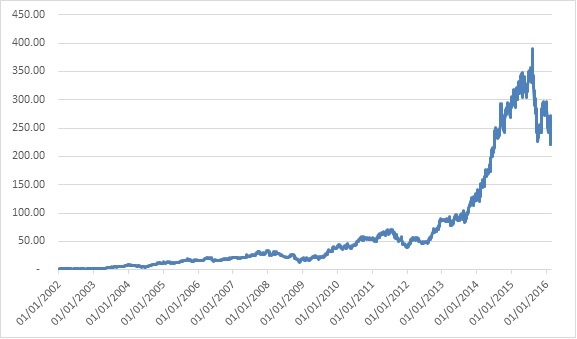
Markets are by nature volatile and hence make your emotions swing. It is normal to get upbeat in a bull market (and laud your expertise) and disheartened in a bear market (and curse bad time and luck). However, what is critical is your endurance during the down market where your emotions are tested to the hilt. I remember buying some of what is called today as blue chips way back in 1990’s when I stepped into a career. If only I had the endurance to have held them today, I could have retired a while ago! Instead, I gave into the market psychology of selling when everyone was selling. Sometimes, your investments go nowhere though they are not producing any losses. They can test your patience since you will have the urge to compare them with broader market or with other stocks. Stock price appreciation can never be a straight line. Many stocks have a long time period of flat performance and then a takeoff (what I call as inflection point). But the point is we cannot predict when that take off will happen. Since we cannot predict this, we sometimes lose interest and exit the investment. That can prove costly as well. Here is an example of Eicher Motors. Notice the long stretch of flat stock prices (2001 to 2009) hovering between Rs.24 and Rs.400, and then a sudden burst of performance taking the stock price all the way up to Rs.21,000 within a short span of time. If you were holding this stock since 2001, it would have really tested your patience!


2.   Going by the Herd Mentality
Identifying investment opportunities is a time consuming and lonely work. It requires validation from several fronts including financial analysis, qualitative analysis and connecting all the dots that are strewn all over the place. Even then, one cannot be sure about the future prospects as on the date of investing. However, there is an easy way of doing all this. Just go by what your friends/colleagues/relatives are doing or what your brokers recommend. If they are buying ITC, so buy it. If markets are going up, keep buying when the trend is positive regardless of whether valuations are reasonable. This is a sure recipe for underperformance. I used to compile the top holdings of all the leading fund managers to see where they are investing in order to mimic their investments only to realize that such a strategy is very similar to herd mentality which the fund managers themselves are suffering from!

3.   Mistaking name/brand for profits
The key indices (like Sensex and Nifty) are always dominated by large caps. By definition, most of them would be market leaders in their respective industry (Bajaj Auto, Infosys, Reliance, HDFC, ITC to name a few). Market leaders are big brand owners. But being big and owning sexy brands do not equate to good performance all the time. Sometimes, it is the small seemingly boring businesses without any recognizable brand power that can create enormous shareholder wealth, which is what we are concerned. Also, once a company becomes large cap and brand leader, it may unnecessarily spend loads of money to keep that status which can be a big negative for shareholders. No wonder, many of the large caps in the index have poor performance track record during the last 5/10 years in terms of creating shareholder wealth.

4.   Not acting when I should Have
It is said that the easiest thing in the stock market is to buy and the toughest is to sell. You will be forced to take a sell decision under three scenarios i.e., when you made good money and wondering if you want to take some profits, when you have lost significantly and wondering if you should cut further losses or when you have a liquidity need where you are forced to sell regardless of the situation. The first is a good problem to have and the third is a bad problem to have. However, the trickiest part is the second. This is where psychology comes and acts as a spoiler. When your investment is down, your psyche refuses to accept it as you feel you have grossly erred in your judgment. And also, there is this innate feeling that this is temporary and the value will come back. This feeling need not be backed by any logic. It can just be a feeling. Also, you have a reference point i.e., your purchase price and your psychology is swayed by this reference point. Unfortunately, the market does not know or does not care what your reference point is. Hence, once the investment goes down in value, it need not come back (as you innately feel). Rather it can go down even further. I remember being caught in one such investment cycle where I invested in a gulf stock called Gulf Finance House (GFH). Relative to my investment value, my realized loss on that investment was 98%!. A classic example of not acting when I should have.

5.   Averaging on the Downside
This probably counts as a very common reaction when your investment value is down. When the stock price tumbles, instead of fearing further downside our instincts let us think that “if it was attractive at the earlier level when I bought, it should be even more attractive now, so let me buy more”. Again the spoiler in this situation is the reference point, which is your initial purchase price. Your reference point has no reference value for the market and hence averaging down on the downside can only result in “throwing good money after bad”. Since markets are volatile, bounce backs are common and can make you feel that you let a great opportunity to average your purchase price when the bounce back happens. However, if price bounces back it will also make your investment look good and hence should be of less worry. But if your averaging down does not pay off, the net loss on that investment will be manifold. Hence, the need to wait for the right price to buy stocks so that we are not caught in this dilemma of “double down”! I am appending a table to illustrate this effect. During the last one year, Nifty has been doing poorly so much so that out of 50 stocks in Nifty 43 of them are in negative territory. All these 43 companies are ripe for “averaging down” concept. The worst performer in Nifty during the last one year was BHEL with a 61% fall in share price. The stock price plummeted from Rs.270 to about Rs.100 now. Any averaging along this path could have produced endless pain. The same can be observed with other indices of NSE as well.


   6.   Not being affected by loss on profits
Not all losses are same. A loss of capital can produce more pain relative to say loss in profits. Hence, complacency to deal with losses in the second case. We panic the moment we have a loss of capital. But we do not show the same panic when our profits  are reduced though in theory a loss is a loss. At least, that is how I dealt with my losses worrying the most in cases where the capital is negative and not worrying about those where it is a loss in profit situation. The best way to deal with this problem is to equate your year-end market value to 100 and look at the appreciation/depreciation from that perspective. Appended is a table with some hypothetical numbers to explain the concept. If your investment starts at 100 and in a 5-year horizon touches a peak of 150 and reverts back to 100, your compounded annual growth rate (CAGR) will be 0 with no negative performance highlighted in the interim 5 years. Since you don’t see any negative performance, you may turn complacent to loss in profits. However, if you equated the year end value to 100 every year, years 3,4,and 5 would have highlighted negative performance. Such a performance highlight could either have enabled you to take the profits or do something else other than stare the stagnant performance.


7.   Not Insuring the portfolio
Insurance need not be restricted to just life, cars and bikes. Even your stock portfolio requires insurance lest you run the risk of swinging along with the market. Like life insurance or other insurance products, portfolio insurance also will cost you money. But that cost is bearable given the downside protection it offers during sharp market downturns. Simple portfolio insurance example is to buy put options. Fortunately Indian markets now offer such portfolio insurance products. Even where you have investments only in mutual funds or ETF’s (for some reason many think they are safe investments!), you still need to insure your investment as your fund manager will not do it for you.

8.   Mistaking performance for stability
When a stock performs well on the back of good company performance, we can mistake it for stability and hence may fail to check the story at regular intervals. Turning points, even in a good scenario, can be sudden and can wipe out gains in no time. A recent example is Motherson Sumi, an auto ancillary company. Like Eicher, the company had a long streak of ordinary performance and then had a nice takeoff. From Rs.88 in Sept 2013, the stock went up to Rs.348 in August 2015. Not many paid attention to its over dependence on Volkswagen (40%) and when bad news came in the form of scandal involving VW, the stock price of Motherson Sumi plummeted 42% in just two months!


9.   Mistaking Performance for Skill
The biggest mistake you can make as an investor is to attribute success to your skill and failure to luck! (or bad luck!).  The performance of a company and therefore its stock price is dependent on scores of quantitative and qualitative factors. While through skill you may be able to crack the quantitative part, it is a time-consuming and innate exercise to look through a company qualitatively. Qualitative factors include a deep understanding of the Board and executive management, their track record in terms of corporate governance, ethical conduct of the company and its owners, employee remuneration, tweaking books to show a certain performance number, political connections, front running the stock, insider trading, etc. Either you devote a considerable time unlocking these essential elements to develop the needed conviction or go with a gut feel on the subject. Given our inability to find time, we normally resort to the second tactics. When your decision turns positive, you feel you are in control of this process. Always double check the story during a good performance period just to be sure you can keep the profits.

Honestly I have been through all these mistakes in one form or other. This list of mistakes may not be exhaustive and I may unravel many more as I reflect. 


December 30, 2015

All Time High’s: Sensex Stocks


2015 is over and hence time for introspection. Sensex is down 6% for 2015. However, what can be of interest is that it is down 13% from its All Time High (ATH) which was 29,681 achieved on 29th January 2015.

ATH is simply defined as the historic high for a stock or index. Meaningful markets and stocks consistently establish new ATH’s reflecting growth and opportunities. While stagnant markets/companies may struggle to re-conquer their ATH’s and can thus test investor patience (Japan for eg).

For Sensex, let us first focus on the bad news. Here is a list of 7 stocks that had their ATH’s way long back:


 Wipro, the IT giant, achieved its historic high some 16 years back and is down 34% since that level. In other words, it would need a jump of approximately 52% to catch up with is historic high which it has been struggling to do for the last 16 years. This probably represents an outlier.


Next in the list is a telecom giant (Bharti Airtel) that saw its peak glory some 8 years back and is down 40% since that level. It would need a climb of 66% to reach its ATH again.

However, from a gap point of view, Tata Steel is the worst performer with its current stock price representing a gap of 72% compared to its all-time high achieved in December 2007. In other words, it would need a 350% appreciation in its stock price to scale back to its ATH, a very unlikely scenario. BHEL, a public sector company, is not way behind in terms of the gap. Its current stock price represents a 70% scale back compared to its ATH achieved in November 2007, just before the onset of the Global Financial crisis.

A perusal of this list reveals dominance of public sector companies, with 3 out of 6 in the list. 

Before we jump to the good news, let us also see a moderate version of Sensex stocks i.e., stocks that had their ATH in 2014, not so far away as the first list.


High on this list is ONGC, a public sector oil company, whose stock plunged 50% from its ATH. It is now 19 months since that peak was achieved and it requires a stock rebound of 200% from its current level to get back to its peak. Closely following this is another public sector company, GAIL whose price gap between its ATH and current price is 32%. The best in this category is Bajaj Auto, the auto giant that achieved its ATH during November 2014 and is only 7% away from its historic peak. It only requires a rebound of 7% to touch its ATH, which is quite a possibility.


Now comes the good news i.e., list of Sensex stocks that touched its ATH’s during 2015. Surprisingly, this list includes Sensex itself!


Tata Motors trails this list with the steepest gap at 36%. It achieved its all-time high in January 2015 and now needs a rebound of 57% to close the gap. There is only one public sector company (Coal India) in this coveted list. Sensex, the index, also achieved its ATH in January 2015 and now has a gap of 13%. It will need a 15% rebound from the current level to test new heights, a good possibility in 2016.


The final comments should go to Maruti Suzuki, the auto giant. It enjoys the best performance of the lot on this key metric. It touched an ATH during November 2015 and is only 3% away from that level. With a 3% rebound, it can set a new high.


It is important for bellwether stocks to touch new highs and not languish on old glory. Stocks touch new highs primarily on performance though speculation cannot be ruled out. While speculation can set the fire, the continuance depends on fundamental performance. Being part of Sensex, these stocks enjoy high liquidity and patronage from foreign investors as well. They are well covered by analysts. While constructing a portfolio/investment strategy, it is important to note whether stocks are touching new highs. It is better to avoid stocks that came away a long mile from their historic highs and shows no signs of getting there. While these stocks will still be part of index funds or ETF’s, they need not be part of an active portfolio strategy.

November 27, 2015

Linking Sectors to Companies-A 4 Grid Approach


In one of my previous post, I argued for the need to distinguish between good sectors and bad sectors in portfolio investment. However, in the Indian capital market context, the availability and popularity of sector indices/ETF’s is still developing making it difficult to implement a sector based portfolio strategy. As an extension of that research, it may be worthwhile to see the link between sectors and companies. In simple terms, you may have a bad company in a good sector or a good company in a bad sector. How do you reconcile such conflicts?

Why Sectors matter?
Source: Reuters Eikon

BSE has 19 sector indices. If one tracks their annualized performance for the period January 2008 to September 2015, we can see that there is wide variation in their performance. While healthcare was the best performer (20.1% compounded return), Realty sector was the worst performer (-24.6% compounded return) with Sensex performing at 3.8% annualized. Out of the 19 sectors, 8 outperformed Sensex while others underperformed Sensex. Hence, sector performance matters.

Source: Reuters Eikon


While the annualized performance shows huge variation, even within a sector we see wide variation in performance as captured in the graph that depicts median performance. The best example is that of Healthcare, where the best performer clocked an annualized performance of 43.1% while the worst performer clocked an annualized performance of -29.1% with a median performance of 21.4%. Hence, it may not be enough to just bet on good sectors as even within good sectors we notice wide variation in performance.
 The 4 Grid approach
Here is the dilemma while choosing companies. We may have good companies in bad sectors (like Castrol in Oil and Gas) or bad companies in good sectors (Financial Technologies). Hence, it may be worthwhile to regroup the index constituents across these four dimensions and assess their portfolio performance (based on market cap weights):
            1.     Good companies, good sectors (A)
            2.     Good companies, bad sectors (B)
            3.     Bad companies, good sectors (C)
            4.     Bad companies, bad sectors (D)

   The definition of a good company/sector is that it outperforms the Sensex returns and conversely a bad company/sector is the one that underperforms the Sensex.

Here are the findings:


Grid A (Good companies, Good Sectors)
Grid A companies (67 of them) have outperformed both their sector and the wider Sensex with the highest performer clocking an annualized performance of 85% (Indiabulls Housing Finance) while the lowest performer clocking an annualized performance of 3.8% (Mphasis) still better than Sensex. All the more, when you group them as a portfolio (market cap weighted) the portfolio performance is an impressive 17.5% annualized compared to Sensex performance of 3.8%.


Grid A-Top10

Sl. No.
Name of the company
Annualized Return (2008-2015)
1
Indiabulls Housing Finance
85.1%
2
TTK Prestige
46.5%
3
Lupin
43.1%
4
Jubliant Food Works
42.7%
5
Aurobindo Pharma
40.8%
6
Vakrangee
37.7%
7
PC Jeweller
37.6%
8
Strides Acrolab
37.0%
9
Whirlpool
35.7%
10
Cadila Healthcare
35.6%

Grid B (Good companies, Bad Sectors)
Grid B companies are drawn from sectors that has underperformed the Sensex but whose constituent companies have outperformed the wider Sensex and contains 24 companies with the highest performer clocking an annualized performance of 63% (Eicher Motors) while the lowest performer clocking an annualized performance of 4.4% (Siemens) still better than Sensex. All the more, when you group them as a portfolio (market cap weighted) the portfolio performance is 14.9% annualized compared to Sensex performance of 3.8%

Grid B –Top 10


Sl. No.
Name of the company
Annualized Return (2008-2015)
1
Eicher Motors
62.8%
2
Shree Cements
32.3%
3
Asian Paints
30.0%
4
Pidilite Industries
25.5%
5
FAG Bearings
25.4%
6
Castrol
23.1%
7
Havells Inda
18.0%
8
BPCL
16.4%
9
AIA Engineering
14.9%
10
Indraprastha Gas
14.0%

Grid-C (Bad Companies, Good Sectors)
Grid C companies are drawn from sectors that has outperformed the Sensex but whose constituent companies have underperformed Sensex and contains 19 companies with the highest performer clocking an annualized performance of 1.2% (ICICI Bank) while the lowest performer clocking an annualized performance of -33.4% (Financial Technologies) far worse than Sensex. All the more, when you group them as a portfolio (market cap weighted) the portfolio performance is -5.0% annualized compared to Sensex performance of 3.8%
Grid C-top 10
Sl. No.
Name of the company
Annualized Return (2008-2015)
1
ICICI Bank
1.2%
2
SBI
0.8%
3
Dish TV
0.4%
4
Punjab National Bank
0.1%
5
Sun TV
-1.5%
6
Jagran Prakashan
-1.5%
7
Union Bank of India
-2.1%
8
Canara Bank
-2.2%
9
DEN Networks
-4.6%
10
Blue star
-4.7%

Grid-D (Bad Companies, Bad Sectors)
Grid D companies are drawn from sectors that has underperformed the Sensex and whose constituent companies have also underperformed Sensex and contains 65 companies with the highest performer clocking an annualized performance of 3.6% (ACC) while the lowest performer clocking an annualized performance of -43.1% (Unitech) far worse than Sensex. All the more, when you group them as a portfolio (market cap weighted) the portfolio performance is -7.9% annualized compared to Sensex performance of 3.8%

Grid D-Top 10

Sl. No.
Name of the company
Annualized Return (2008-2015)
1
ACC Ltd
3.6%
2
Gujarat State Petronet
2.6%
3
Adani Port and SEZ
2.2%
4
Pipav Defence
1.8%
5
Alstom
1.6%
6
IDEA Cellular
1.0%
7
Aditya Birla Nuvo
0.8%
8
Lakshmi Machine Works
0.7%
9
Grasim Industries
0.7%
10
Larsen & Tourbo
0.7%

Key Takeaways

         1.     A strong look at the sector to which a company belongs is key to identifying winners
      2.  There may be good companies in bad sectors and vice-versa. Hence, a sector bias should not cloud out opportunities.
       3.     In general, good companies come from good sectors. That is a killer combination to have in your portfolio (Remember Grid A)
        4.     In general, bad companies come from bad sectors. This should be avoided at all costs. (Remember Grid D)

The author thanks Rajesh Dheenadayalan for data analytics and support